

AUTHORS
Favel Parrett Q&A

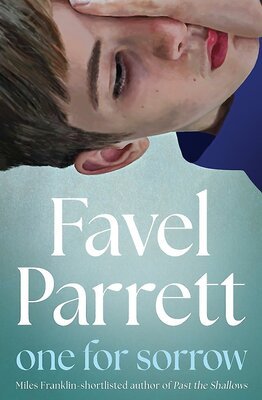
Favel Parrett is a writer based in Victoria, Australia, whose work explores landscape, memory and human connection. In 2011, Favel's career was launched with her critically acclaimed debut, PAST THE SHALLOWS. It was sold internationally and was shortlisted for the Miles Franklin Literary Award and won the Dobbie Literary Award. Favel won the ABIA Newcomer of the Year Award in 2012. Her novels WHEN THE NIGHT COMES (2016) and THERE WAS STILL LOVE (2019) further consolidated Favel's reputation with booksellers and readers. THERE WAS STILL LOVE was shortlisted for the Stella Prize and won Book of the Year at the 2020 Indie Book Awards. Favel is also the author of the bestselling children's books WANDI (2021) and KIMMI (2023). ONE FOR SORROW is her latest adult novel.
Why do you tell stories?
II don’t think I have ever been very good at anything else! And I am still surprised that I have a career writing novels. I feel so blessed.
Without talking about plot in any way, what would you say One For Sorrow is about?
Love, secrets, and resistance. One for Sorrow begins in Norway at the cusp of the Second World War, when young Einar Halvorsen gets a new teacher who will change his life forever. As war comes to Einar’s town, this teacher will ignite a pride in Einar that the Nazi’s can’t steal, as well as a profound love of words. Seventy years later, he will also teach Einar that some sorrows never leave.
Can you tell us about the school building where our two main characters, Johan (a school teacher) and Einar (a young student) meet? What else has this building, described in the opening scenes, been or become?
Ah – my beautiful school building. It was built by factory owners and business men in the poorest suburb in Trondheim, and it is still a very grand building. It was probably built just to ensure that future factory workers could read and write, but it was a huge deal for the city suburb at the time. In 1940, it was taken by German soldiers as barracks. Then in 1945, it was taken over by British soldiers as barracks. By the 1950’s, it was in a sorry state and was unusable as a school. It opened as a mixed high school in the 60s and closed in 1995. Soon after, artists moved into the classrooms and have been there ever since. It is now called Lademoen Kunstnerverksteder (LKV), and has international residencies as well as permanent local artists. Many of the class rooms have not changed that much. It is a very atmospheric place.
With your writer’s hat on, what fascinated you about (or drew you to) the city of Trondheim in Central Norway?
I was lucky enough to visit Norway over 15 years ago, and I fell in love with the place. I made a wish to return for an artist residency or a published novel. I eventually won an arts residency in Trondheim in 2023, and I was given an apartment in the school building where much of the novel is set. One of the old classrooms was my studio, and the ghosts of the children from the past were there with me. I enrolled in Norwegian lessons and explored every street in the part of the city I was writing about. Trondheim will always be in my heart.
Johan introduces Einar into a world of books, and in particular, the simple and straightforward sentences of Ernest Hemingway. What influence has Hemingway had on your own writing (I ask this because there is a crystalline simplicity and directness to your own sentences)?
The Hemingway short story - In Another Country changed the way I read and influenced the way I wanted to write. It is my favourite short story. The emotion I felt reading this seemingly simple story for the first time intrigued me. What was happening here? How could these short, simple sentences punch me in the guts so hard? I almost know this story by heart. I still feel every sentence.
What did you learn about the Nazi occupation of Trondheim in the 1940s that surprised you?
I knew nothing about the occupation of Norway, or the resistance movement, or the fact that Hitler adored Norway for its landscape and people. He wanted Norwegians to love him and embrace his madness. He was very surprised when they did not. I learned so much while I was in Trondheim from museums and historians. The research fascinated me and drew me in, and I could have kept going for years. I did not want this to be a book about the war. I wanted it to be about my characters and how they each got along during occupation. I hope I have done that – and helped readers learn a little bit about the occupation at the same time.
This is your most sensual book yet. What was it like to write intimacy as act of resistance?
It was very hard! Especially as I am writing it from a male point of view. I still don’t know if I have captured it all very well. I tried to feel the loneliness and need, and fear, as well as the more tender and softer moments. I found it challenging and wrote many, many drafts of each scene.
What were you under the influence of (books, authors, ideas, art, or anything else) while writing this book?
I was learning Norwegian so that I could get the melody of my characters' thoughts and speech right. I was watching Norwegian television and movies as much as I could. I was listening to Norwegian podcasts, and I was reading historical non-fiction about Norway during occupation. I was also reading modernist writers of the time like John Steinbeck and Jack London – and seeking out modernist art in the Trondheim art galleries.
Which adjectives by readers and reviewers used to describe your writing, most please you?
This is a hard question. Maybe lyrical – atmospheric?
Tell us about your natural writing habitat.
I write from a very messy desk in a room full of books, art, shells, plants and other junk that usually relates to what I am writing at the time. I look out over a forest, and there is not one neighbour in sight. I have to have quiet when I write, but sometimes I listen to soundtracks or anything without lyrics.